

Whilst you might be meeting your users’ basic needs, you might not be supporting their more nuanced requirements. Thinking styles could help, but what are they? And what’s the difference between thinking styles and personas?
Imagine you could step right inside your customer’s minds, just at the very moment they were making crucial decisions. Imagine you could tell what your users were thinking, perhaps even what they were feeling, as they experienced your product. That would be an incredible power, wouldn’t it? It would certainly help you make better decisions and help your organisation succeed.
The only problem is that sort of thing just isn’t practical, and you certainly can’t include your users in every conversation and decision you make. That’s where thinking styles and personas come in. They are two powerful techniques to help organisations stand in their users’ shoes.
To help get us started, let’s get a quick, simplified understanding of each:
“personas are characters, Thinking styles are how people approach a task”
Let’s take Monica from Friends as an example, her chef persona might be:
Monica
Head Chef
Persona
Works in a small, high-end restaurant. In charge of purchases, responsible for creating the menu, hiring and managing kitchen staff. ~~~~~~ ~~~ ~~ ~~~~~~~ ~~~~ ~ ~~~~~~ ~ ~~~~~ ~ ~~~~~ ~~~~ ~~~~~ ~ ~~~~~ ~~~~~

Motivations
I care about sourcing good quality produce as it directly impacts the taste of the food and the success of the business.
~ ~~~~ ~~~~~~~~ ~~ ~~~~ ~~~~~ ~~~ ~~~~~
Goals
Creating tasty, unforgettable dishes.
Buying produce based on quality, locality and price.
~~~ ~~~~ ~~~~~~~~ ~~~ ~~~~~ ~~~~~~~~ ~~~~ ~~~~~~~
In addition, she might have multiple thinking styles when working in the kitchen, such as:
Competitive Thinking Style
This meal has to be the best meal ever. Not only am I competing with other restaurants, I’m competing with myself and the meal I made yesterday.
Orderly Thinking Style
Everything has its place, so the kitchen is kept tidy. This makes it easier to find things when I need them. I don’t feel in control when things aren’t where I expect them.
Now, let’s dive in and learn more about thinking styles and personas, the difference between them, and which will work better for you.
What are thinking styles?
Whilst we are all different (no one, not even identical twins approach things in exactly the same way), there are behavioural patterns that groups of people share. That’s where thinking styles come in. They are a concept created by Indi Young (a qualitative data scientist), who explains them as archetypes. They provide extra depth to characters by explaining their inner thinking, needs and rules which drive their behaviour.
A thinking style usually consists of a title, and 1 or 2 short paragraphs or a list of bullet points. That’s it.
Let’s look at Monica again and her competitive thinking style. She approaches most things with a mindset of winning at all costs. She wants to be the best at what she does to prove to others and herself that she has value (likely due to being overlooked by her parents, who prefer her brother, Ross). This competitive behaviour is driven by the need to be seen, validated, and to ‘know she is enough’. The creators of Friends knew there were lots of people who might see themselves in Monica, or who might see their friends in her. That’s partly why she was such a loveable and relatable character in the hit series.
I like to think of thinking styles as:
“Patterns in how people approach a task”
They are aligned with a person’s ‘way of being’ so often remain relevant over time. Imagine you are in a fancy restaurant, you’re hungry and looking forward to it. How do you go about choosing your food? Here are some options. Which one do you do?:
- Read everything first.
- I need to know all the options on the whole menu before I make a decision. I fear I may miss out on the best food combination for me.
- Choose the first one that looks good
- As soon as I see something I like, I choose it, there’s no need to read any further because I don’t want to waste time deliberating.
- Stick with what I know
- I know what I like and I’ve ordered it before. I don’t want to risk something different and being disappointed.
- Something else…
People usually have a dominant thinking style, but they are context-dependent so may switch depending on the situation. For example, if you are in a hurry, you may switch to the ‘Choose the first one that looks good’ thinking style.
Another way I like to think about thinking styles is what glasses a person is wearing at a moment in time. Are they seeing things through a certain lens, and how is that impacting their behaviour?
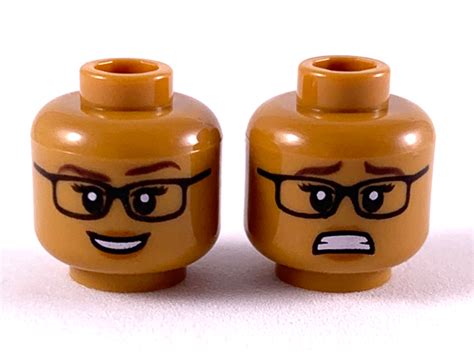
There will be times when users have multiple lenses on at the same time. As well as a ‘competitive’ thinking style, Monica has the ‘orderly’ thinking style and perhaps a ‘thoroughness’ thinking style where she is meticulous and methodical, trusting her own standards above others.
Indi Young helpfully adds that people may bring additional lenses that influence their behaviour such as discrimination, physiology, culture or their environment. An example of a physiological lens could be, struggling to book a doctor’s appointment when you are well, you might be calm, persistent and flexible, whereas, struggling to book one when you are unwell, you might be less persistent or tolerant.
Challenges of thinking styles
Of course, thinking styles come with their own challenges, and there are some pitfalls to avoid if they are to be truly useful:
- They require solid research and deep listening to identify meaningful patterns.
- If the research is too broad it can be difficult to see patterns of thinking styles. Set clear boundaries and focus on a specific user goal.
- Sharing them within organisations can be challenging as they aren’t as visual or as well-known as personas. Use memorable titles that summarise the style in a positive way. Explain what they are, how you are using them, and embed them into your processes.
- Thinking styles can help you analyse who you are currently supporting well and not so well. This may mean making difficult decisions about prioritising who to support in the short term over the long term.
What are personas?
Personas are fictional characters based on research. They are a simplified representation of an organisation’s different user types.
Remember Monica’s head chef persona. That might be the right persona for a company that sells produce to restaurants, but it won’t be the right persona for a company selling sofas. In that case, research may create a different persona in relation to sofa buying.
Each persona usually has a name, picture, situation in relation to the organisation, goals and motivations. The contents of a persona can vary depending on the nature of the research and the organisation’s needs, for example it may include behaviours, pain/joy points, and intrinsic/extrinsic barriers to action. Ideally, you want no more than seven personas, so they’re not overwhelming, but again, it’ll depend on the situation.
Great personas are based on good user research, are memorable, and help staff increase their empathy for their users. They don’t include demographics unless they directly impact the users’ needs and experience.
Challenges of personas
I believe that, done well, for the right reasons, and in the right context, personas are a powerful tool.
However, there are some challenges to be aware of:
- They need to be based on good research. I’ve seen many based on one person, limited diversity of perspectives, or just plain made up.
- Generally, personas are distinct but people can overlap with multiple personas and that is ok. For a charity, for example, you may have a donor persona and an activist persona, both of which may apply to one person. Because of this, they aren’t market segments. A persona is a guide, a simplified model of reality, it’s not real.
- It’s usually best to avoid demographics unless they come up in the research patterns. Including unnecessary demographics can lead to bias. For example, staff start to think only married people aged 32, living in Birmingham, relate to the company in the way described in the persona.
- Careful use of imagery. As with demographics, a photo or avatar can introduce bias, either via perceived age, gender, ethnicity or any other physical difference. I’ve tried using symbols and colour instead but they can struggle to deliver the empathy required. Having a relatable human image associated with the persona increases the likelihood of them being used so this is a trade-off to consider.
- Maybe there’s a future where AI-generated personas are good, but right now, I exercise extreme caution due to the rule of ‘rubbish data in = rubbish data out’ and the inherent biases within the data. It can provide ideas for popular consumer types, but be wary of using research to ‘verify’ its suggestions rather than exploring what’s really happening. My experience so far has shown it to be biased and missing detailed nuances, especially for more specialised audiences.
Which approach to use?
Firstly, think about what problem you are trying to solve. Don’t do personas or thinking styles because you think you should, or because others are doing them.
My general rule of thumb is to use personas for breadth and thinking styles for extra depth.
Personas are useful when you want to understand your key audiences in the broadest sense. When you want to find out if there are particular groups with different needs and motivations in relation to your products and services.
They are particularly useful for membership organisations, many of which support individuals with changing needs and motivations as their careers or interests develop over time.
Thinking styles are useful when you want to understand patterns in behaviour or mindsets that occur when users focus on a goal.
Thinking styles allow you to zoom in and understand the deeper layers of behaviour as individuals try to do something, perhaps booking a doctor’s appointment, donating to a charity, or learning something new.
They can be a powerful tool for critical user journeys, helping to improve the user experience and support the diverse needs of your audience beyond (what we perceive to be) the typical user.
The difference in how they are presented may also impact your choice. Personas have more content, they have a name and a human face so they are memorable and more personable. Whereas thinking styles are short, and are remembered by a phrase that captures the mindset positively.
It doesn’t have to be a choice. You can have both as they complement each other, with thinking styles providing a deeper layer of understanding beyond personas. And, given they are context-dependent, multiple thinking styles can be applied to multiple personas.
In reality, there can be overlap between the content contained within personas and thinking styles. It can depend on what is discovered in the research and how the researcher decides to frame the user needs, motivations, behaviours, and mindsets.
How often should you update them?
When done well, they can both stand the test of time and be relevant for many years.
I have some clients who are still using their personas ten years on. However, I recommend reviewing them every five years or so, or when there’s been a significant change in the market or your offering. If they reference technology usage, then updating them sooner would be prudent.
Thinking styles remain relevant for longer, as human archetypes or mindsets rarely change over time or across cultures. I still recommend reviewing them when there’s been a significant change in the market or your offering.
I also recommend reviewing new user research you carry out, to see if it changes the personas or thinking styles. I say that with caution, as isolated research can distort and overlook audience patterns. Better still, schedule deep listening research every couple of years, depending on the pace of change in your industry.
Call to action
- What gaps, are there in your organisation’s understanding of your users?
- Do you understand the breadth of users that you have? Do you understand their more nuanced behaviours more deeply?
- What, if anything, is stopping your personas or thinking styles from being used internally?
- Where can you embed them into your processes?
If you’d like help in your team or organisation, through mentoring and support or if you need someone to create personas or thinking styles, please get in touch.

